
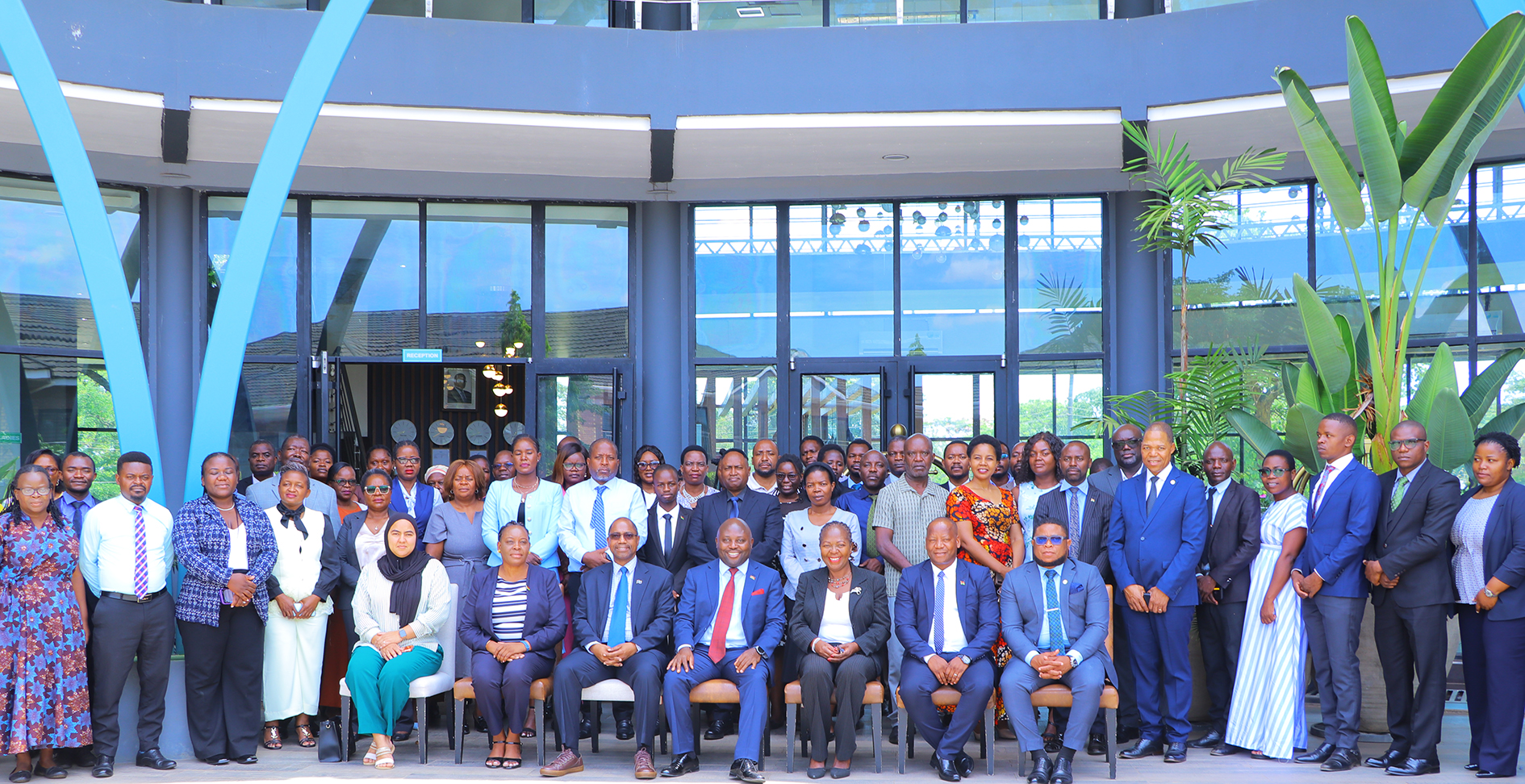
The Southern African Development Community (SADC), in collaboration with the Ministry of Industrialisation, Business, Trade and Tourism (MoIBTT) of the Republic of Malawi, and with support from the German Government through GIZ and the European Union (EU), has officially launched Malawi’s Coordinated Border Management (CBM) National Strategy.
The launch took place on 25 November 2026 in Lilongwe, Malawi, marking an important milestone in the country’s efforts to modernise border operations, facilitate legitimate trade and improve coordination among border management agencies.
The CBM National Strategy provides a national framework for strengthening cooperation among agencies operating at the country’s borders. It seeks to streamline border procedures, reduce clearance delays and trade transaction costs, and enhance the efficiency and predictability of cross-border operations.
The occasion also marked the formal handover of the Strategy and its accompanying Implementation Action Plan to the Government of Malawi, signifying the completion of the technical development process and paving the way for implementation.
The Strategy was developed under the SADC Trade Facilitation Programme (TFP), funded by the European Union through the 11th European Development Fund (EDF). GIZ, through the Cooperation for the Enhancement of SADC Regional Economic Integration (CESARE) Programme, provided technical and logistical support towards its finalisation.
Speaking at the launch, Mr Wiskes Nkombezi, Principal Secretary in the Ministry of Industrialisation, Business, Trade and Tourism, expressed appreciation to the SADC Secretariat and its cooperating partners for their support in advancing Malawi’s efforts to modernise its border management systems.
He noted that the Strategy provides a common framework to guide border agencies in strengthening institutional cooperation, harmonising procedures and improving operational efficiency. He emphasised that its successful implementation would help translate trade facilitation commitments into practical outcomes for businesses and the wider economy. He called upon all border agencies to harmonise their processes and assume collective responsibility for effective border management.
Mr Alcides Monteiro, Senior Programme Officer for Customs, speaking on behalf of the SADC Secretariat, commended the Government of Malawi for its commitment and perseverance throughout the development of the Strategy. He noted that its implementation would contribute to improving trade and commerce in Malawi while supporting the objectives of the SADC Industrialisation Strategy.
He reaffirmed SADC’s commitment to supporting Member States in improving border efficiency and facilitating trade in line with the Regional Indicative Strategic Development Plan (RISDP) 2020–2030. He highlighted the potential of coordinated border management to expedite the movement of goods, reduce trade transaction costs and enhance national and regional competitiveness. He further noted that the Strategy would promote the simplification and harmonisation of trade documentation and border procedures, improve the predictability of regulatory controls, strengthen border security and enhance cooperation among border agencies.
Ms Chipiliro Masanjala, Deputy Commissioner of Customs and Excise at the Malawi Revenue Authority (MRA), described the Strategy as a significant step in Malawi’s efforts to modernise border operations, strengthen inter-agency cooperation and facilitate legitimate trade and the movement of people across its borders.
The launch was attended by representatives of various Government of Malawi ministries and agencies, customs and security authorities, private sector organisations and other stakeholders involved in trade and border management.
The development and implementation of Coordinated Border Management strategies across SADC Member States form part of broader regional efforts to simplify trade procedures, modernise customs operations and promote efficient, transparent and coordinated border management. These efforts are aligned with international best practices, including World Customs Organization (WCO) guidelines, as well as Member States’ commitments under the World Trade Organization (WTO) Trade Facilitation Agreement (TFA).


