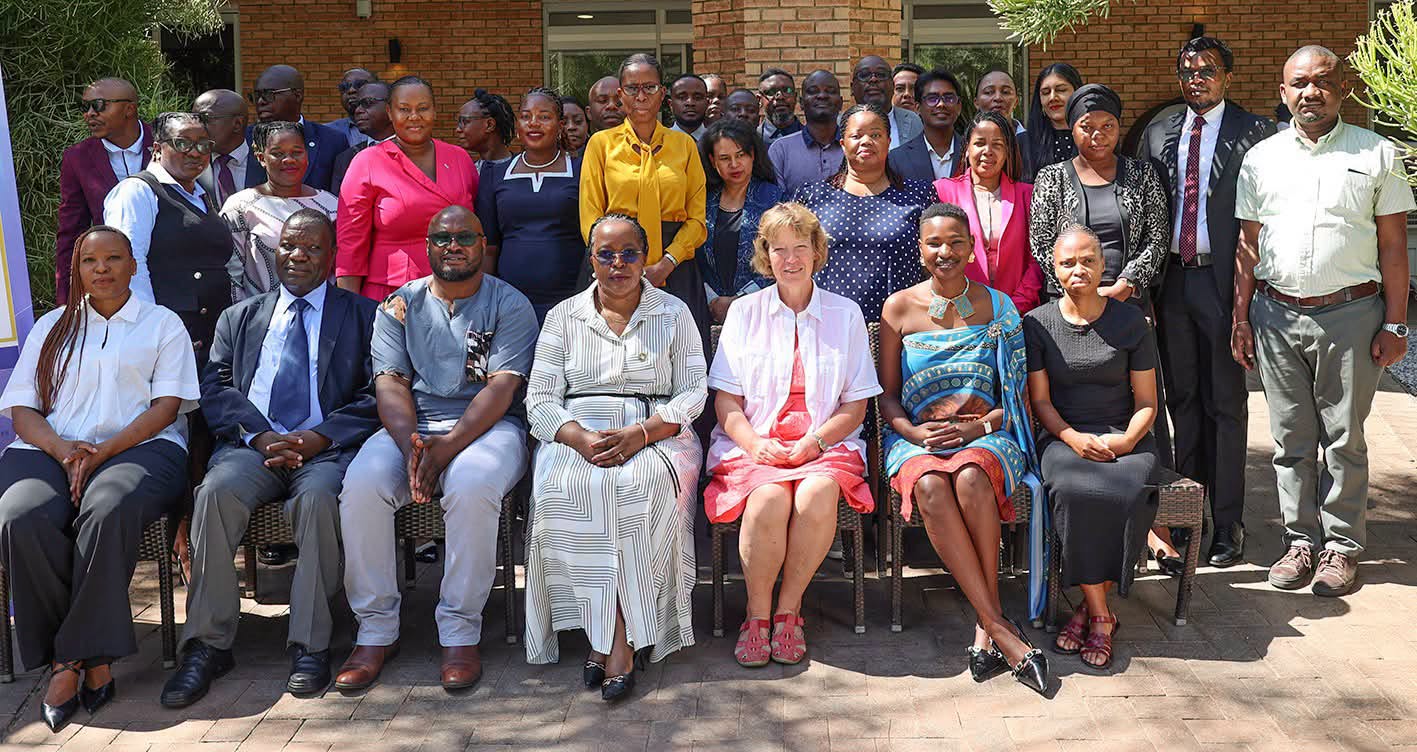
The Southern African Development Community (SADC), with support from the German Government, is strengthening the capacity of media professionals to communicate the impact and benefits of regional integration through a three-day capacity-building workshop taking place from 24-26 November 2026 in Gaborone, Botswana.
The workshop, organised by the Strengthening the National-Regional Linkages (SNRL) Programme in collaboration with the SADC Secretariat brings together media professionals and government communicators from SADC member states to strengthen their understanding of SADC’s regional integration agenda and enhance their ability to communicate its achievements and socio-economic benefits to citizens across Southern Africa. These targeted professionals play an important role in communicating SADC programmes, policies, decisions, achievements, and initiatives within their respective Member States.
Regional integration is central to advancing sustainable economic growth, poverty eradication and socio-economic development across the 16 SADC Member States. Guided by the Regional Indicative Strategic Development Plan (RISDP) 2020–2030 and SADC Vision 2050, Member States have committed to collective action to address shared development challenges and improve the quality of life of citizens across the region.
Enhanced public awareness is essential to highlight significant progress in advancing SADC regional integration, and its benefits and hence the need for appropriate skills, tools, developing compelling narratives, engaging diverse audiences, and using traditional and digital communication platforms..
To address these challenges, the SADC Secretariat, with support from Germany, developed the SADC Communication, Awareness and Visibility Strategy 2025–2030, launched in November 2025. The Strategy recognises the media as a strategic partner in communicating SADC’s programmes, achievements and impact, while fostering greater public awareness, engagement and ownership of the regional integration agenda.
The current workshop contributes to the implementation of the Strategy and focuses on three interconnected areas:
Strengthening understanding of SADC’s institutional architecture and policy frameworks: Enhancing participants’ knowledge of SADC structures, regional protocols, policies and achievements, as well as the linkages between regional commitments and national development priorities.
Enhancing impact storytelling and evidence-based reporting: Equipping media professionals with practical skills in data interpretation, fact-checking, interviewing, human-interest storytelling and ethical and gender-sensitive reporting. Through practical newsroom exercises, participants will explore how regional achievements in areas such as trade, energy, gender and development can be translated into compelling stories that demonstrate tangible benefits to citizens.
Promoting sustained media engagement and institutional collaboration: Supporting participants in developing country-specific 12-month action plans, including immediate 90-day implementation steps, to strengthen media coverage, improve coordination between regional and national communication institutions and enhance public awareness of regional integration.
Speaking at the opening of the workshop, Dr Judith Kateera, SADC Deputy Executive Secretary for Corporate Affairs, underscored the indispensable role of the media in shaping public understanding, influencing public discourse, promoting accountability and facilitating informed participation in development processes.
Expressing appreciation for the German Government’s continued support to the SADC region, Dr Kateera highlighted that the media serves as a critical bridge between SADC and its citizens, helping communicate how regional policies, programmes and initiatives translate into tangible benefits for communities across the region in line with the SADC Awareness and Visibility Strategy 2025–2030, which seeks to strengthen the visibility, understanding and appreciation of the Community’s work across the region and globally.
“Media professionals are not merely observers of development but important partners in shaping public understanding, promoting informed dialogue and amplifying the voices and aspirations of the region's people,” she said.
Her Excellency, Ms Gabriela Bennemann, Ambassador of the Federal Republic of Germany to Botswana and Special Representative to SADC, reaffirmed Germany’s longstanding commitment to regional integration, drawing on Germany’s own experience as a member of the European Union.
Reflecting on the importance of making regional achievements more accessible and relevant to citizens, Ambassador Bennemann stated: “Communication serves as a bridge between institutional frameworks and the lived realities of the people they aim to serve.”
She highlighted that effective communication and visibility are essential for building public trust, enhancing transparency, countering misinformation and strengthening regional solidarity.
She further added: “Communication about SADC is not merely about information dissemination. It is about building connections between institutions, member states, citizens, and stakeholders - to strengthen regional solidarity and to strengthen a shared SADC identity.”
The workshop builds on the longstanding support of Germany through the SNRL Programme in strengthening media capacities and promoting public awareness of regional integration. To date, the programme has supported the training of over 500 journalists and government communicators across the region, enhancing their understanding of SADC protocols, regional integration processes and cross-border cooperation, while strengthening their capacity to communicate the tangible benefits of regional integration to citizens.
Emphasising the importance of sustained collaboration beyond the workshop, Ambassador Bennemann stated: “The stories you tell, the issues you highlight and the perspectives you bring forward help build greater public awareness, confidence and support for the SADC regional integration agenda.”
For enquiries:
Barbara Lopi, Head of Communication and Public Relations, SADC Secretariat Email: blopi@sadc.int and cc to prinfo@sadc.int
German Embassy Gaborone, accredited to Botswana and SADC,
Email:PR-1@gabo.diplo.de
…………………………………………………………………………………………………
SADC in Brief
SADC is an organisation of 16 Member States established in 1980 as the Southern African Development Coordinating Conference (SADCC) and later transformed into SADC in August 1992. SADC’s mission is to promote sustainable and equitable economic growth and socio-economic development through deeper cooperation and integration, good governance, and durable peace and security, so that the region emerges as a competitive and effective player in international relations and the global economy. Member States are Angola, Botswana, Comoros, Democratic Republic of Congo, Eswatini, Lesotho, Madagascar, Malawi, Mauritius, Mozambique, Namibia, Seychelles, South Africa, United Republic of Tanzania, Zambia, and Zimbabwe.
Germany in Brief
Germany has been a longstanding partner in development cooperation dating back to 1961. Since 1985, the German Government has supported the work of the SADC Secretariat’s regional integration agenda with more than EUR 500 million. Germany works with the SADC Secretariat and its Member States to strengthen regional institutions, build capacities and translate regional priorities into tangible results. Through its support for regional integration, Germany also contributes to strengthening national-regional linkages, promoting citizen participation and enhancing public awareness of the socio-economic benefits of regional cooperation.
| Attachment | Size |
|---|---|
| PRESS RELEASE_Media Capacity-Building Workshop.pdf (149.34 KB) | 149.34 KB |


