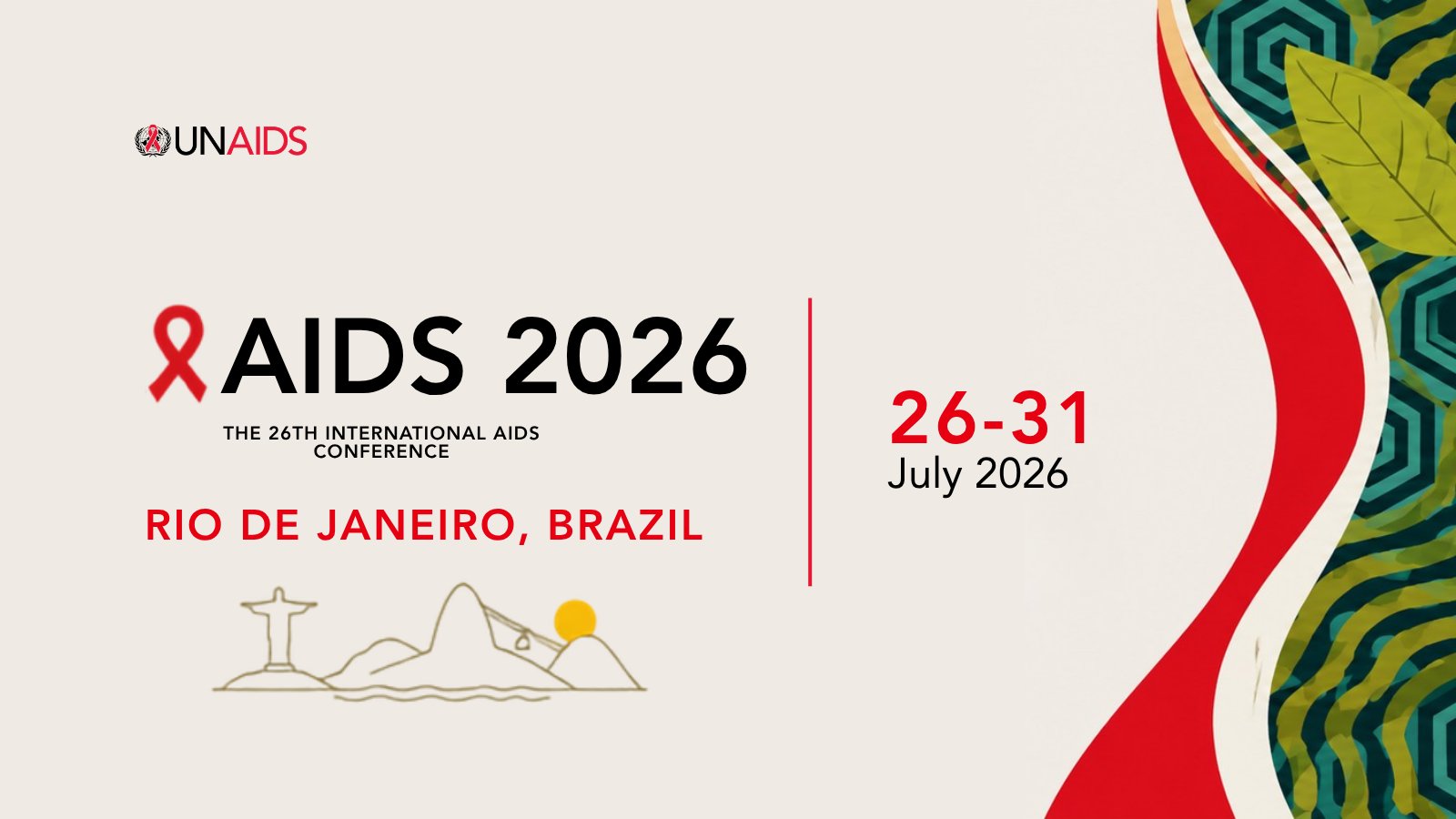
The Southern African Development Community (SADC), in partnership with the Joint United Nations Programme on HIV/AIDS (UNAIDS), convened a high-level satellite session during the International AIDS Conference (AIDS 2026) in Rio de Janeiro, Brazil, on 27 July 2026, reaffirming Southern Africa’s commitment to implementing the Global AIDS Strategy 2026-2031 through sustainable financing, regional solidarity, community leadership and African-led solutions. Held under the theme “SADC Leadership in Implementing the Global AIDS Strategy 2026-2031: Sustainability, Regional Solidarity and Health Sovereignty,” the event brought together government leaders, development partners, civil society organisations, researchers, academia, communities and other stakeholders to reflect on the region’s achievements in the HIV response while identifying strategies to sustain progress amid evolving global health and financing landscapes.
Delivering opening remarks, Ms. Angeli Achrekar, UNAIDS Deputy Executive Director, commended the SADC region for demonstrating strong leadership in adapting to an evolving HIV response and urged countries to view the changing global landscape as an opportunity for transformation rather than retreat. She noted that while the global HIV response is undergoing significant shifts, these developments should be embraced as opportunities to strengthen country ownership, build resilient health systems and sustain national leadership. “The question before us is whether we have the vision to transform for a more resilient future. SADC has already shown leadership by adapting to change, increasing domestic resources for HIV programmes and strengthening country-led responses,” she said.
Ms. Achrekar further emphasised that ending AIDS requires tackling inequalities, investing in innovation and ensuring equitable access to lifesaving services. “Community leadership reduces stigma, strengthens advocacy and ensures that no one is left behind. The HIV response has shown us that solidarity builds sustainable development, and SADC continues to demonstrate that African-led solutions are not only needed, they are essential.”
Delivering the keynote address, Dr. Joe Phaahla, Deputy Minister of Health of the Republic of South Africa, called for stronger African leadership in shaping the future of the HIV response through partnerships founded on regional priorities and shared responsibility. “African countries should lead and shape partnerships according to their own priorities. Sustainable development cannot be achieved in isolation, and neither can the HIV response,” said Dr. Phaahla. He stressed that governments, communities, development partners and civil society must work together to build resilient health systems capable of responding to future challenges. “There are no isolated interventions. We must engage all stakeholders, strengthen community-led responses and ensure that people remain connected to care.”
Dr. Phaahla highlighted domestic financing and local manufacturing as essential pillars for strengthening Africa’s health sovereignty and reducing dependence on external support. “Our collective goal is to build domestically led HIV responses that can withstand future shocks. The systems we build and the partnerships we strengthen today will determine our future. SADC has the opportunity to create a lasting African model for health sovereignty for generations to come,” he said. His address reinforced the need for stronger regional cooperation, resilient health systems and greater domestic investment to ensure that Africa remains firmly in control of its HIV response and is better prepared for future public health challenges.
The side event programme also featured technical presentations highlighting regional progress and emerging innovations. Presenting on “SADC Progress on Implementing the Global AIDS Strategy 2026-2031,” Dr. Lamboly Kumboneki, Senior Programme Officer for HIV and AIDS at the SADC Secretariat, outlined the region’s achievements and the strategic interventions driving long-term sustainability. Dr. Kumboneki reported that the SADC region has achieved a 57% reduction in new HIV infections, while seven SADC Member States have attained the UNAIDS 95-95-95 HIV testing and treatment targets, despite accounting for approximately 44% of the global HIV burden. He explained that these achievements have been underpinned by strong political commitment, regional collaboration and innovative approaches to health systems strengthening. “Regional innovation is driving sustainability. SADC’s value proposition is built on political leadership, knowledge sharing, partner coordination and community leadership. Together, these pillars are enabling Member States to build stronger, more resilient HIV responses,” he said.
Dr. Kumboneki also presented the SADC Regional Sustainability Architecture, anchored on four strategic pillars: sustainable financing through initiatives such as the SADC HIV and AIDS Fund, regional pooled procurement of HIV commodities, resilient health systems, and local manufacturing of medicines and health products. He noted that these initiatives are positioning the region to transition towards sustainable, country-owned HIV programmes while strengthening preparedness for future health challenges. A high-level panel discussion on “Building Sustainable HIV Responses through Regional Cooperation” brought together government representatives, regional institutions and development partners to examine innovative financing, resilient health systems and community-led responses.
Speaking during the panel discussion, Ms. Rosemary Museminali, Director of the UNAIDS Ethiopia Country Office and Liaison Office to the African Union (AU) and the United Nations Economic Commission for Africa (UNECA), highlighted key outcomes of the recent AU Summit, including the adoption of the Accra Declaration and the reaffirmation of the AU Roadmap to 2030 and Beyond. She said these commitments reinforce Africa’s resolve to end AIDS through stronger domestic financing, investment in primary healthcare, expanded local manufacturing of medicines and diagnostics, and the operationalisation of the African Medicines Agency. Ms. Museminali also emphasised that sustainable progress depends on placing communities at the centre of the HIV response while addressing stigma, discrimination and inequalities. “If Africa can lead with solidarity, invest in its own solutions, and put communities at the centre, it will not only end AIDS, it will redefine what health sovereignty looks like,” she concluded.
The discussion was complemented by presentations on regional pharmaceutical innovation, including Regional Manufacturing of Lenacapavir by Dr. Thembisile Xulu of the South African National AIDS Council (SANAC), and Long-Acting VagiTab as a Multipurpose Prevention Technology by Professor Yahya Choonara of the University of the Witwatersrand and the Wits Advanced Drug Delivery Platform (WADDP). The presenters highlighted the importance of strengthening Africa’s pharmaceutical manufacturing capacity to enhance health security, reduce reliance on imported medicines and expand equitable access to HIV prevention and treatment technologies. They also underscored the strategic value of regional pooled procurement in strengthening supply chains, reducing costs and improving access to essential HIV commodities across Southern Africa.
Moderated by Ms. Gloria Bille (UNAIDS) and Ms. Nomenzile Mamba (SADC Secretariat), the interactive session provided participants with an opportunity to exchange experiences, share best practices and identify practical actions for strengthening regional collaboration, expanding domestic financing and ensuring that communities remain at the centre of the HIV response. The satellite session concluded with a renewed commitment by SADC, UNAIDS and partners to accelerate implementation of the Global AIDS Strategy 2026-2031 through strengthened regional cooperation, country ownership and sustainable investment in health systems.
Discussions throughout the session demonstrated that Southern Africa’s response to HIV is increasingly being shaped by African leadership, innovative financing, regional collaboration and community-driven approaches. As the region moves towards ending AIDS as a public health threat by 2030, SADC remains committed to working with Member States, development partners, civil society and communities to build resilient, equitable and sustainable health systems that leave no one behind.


