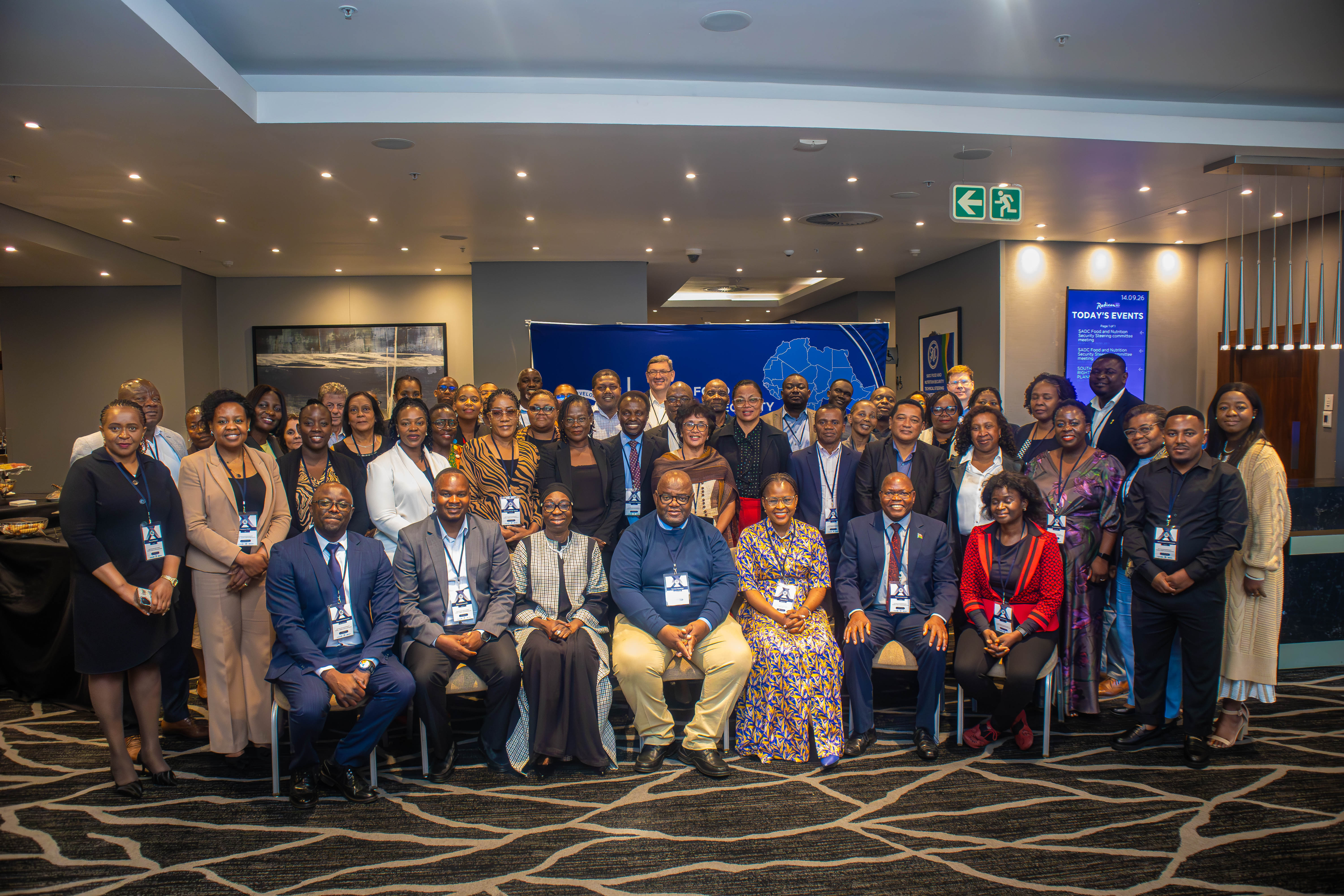
The Southern African Development Community (SADC) convened the SADC Food and Nutrition Security Technical Steering Committee Meeting in Johannesburg, Republic of South Africa, from 14–18 September 2026, bringing together Member States, regional experts and development partners to review implementation of the 2015–2025 SADC Food and Nutrition Security Strategy and refine the draft SADC Food and Nutrition Security Strategy 2026–2036.
The meeting formed part of SADC’s efforts to shape a new 10-year agenda for food and nutrition security, with a stronger focus on resilient food systems, addressing the triple burden of malnutrition, preparedness, accountability and evidence-based action.
The discussions came at a time when food and nutrition security in the region continues to be affected by climate-related shocks, economic pressures, changing food systems and different forms of malnutrition. Against this backdrop, Member States emphasised the importance of ensuring that the new Strategy responds to national realities while remaining aligned with regional, continental and global development frameworks.
The draft Strategy places greater emphasis on effective implementation, stronger coordination, sustainable resource mobilisation and clear accountability. Member States also highlighted the need for practical measures that can translate regional commitments into improvements in the lives and livelihoods of people across Southern Africa.
Discussions on strengthening food systems focused on integrated regional markets, harmonised trade standards, resilient value chains and the promotion of nutritious indigenous foods. Participants also called for improved market information, stronger traceability and certification systems, greater innovation and measures to reduce food loss and waste. Increased domestic investment and flexible financing were identified as important to strengthening the sustainability of food systems.
The meeting also recognised that food security must go hand in hand with good nutrition. Member States called for stronger action to address all forms of malnutrition, including the growing triple burden of malnutrition, through coordinated interventions across food, health, WASH, education and social protection. Stronger dietary guidelines, consumer awareness, safeguards around the marketing of food to children and behaviour-change interventions were among the areas highlighted.
As the region faces increasing climate and other shocks, participants further emphasised the need to move from reactive crisis management towards greater preparedness and resilience. Strengthening early warning systems, cross-border surveillance, regional information sharing and emergency response mechanisms will be important in enabling the region to anticipate and respond more effectively to food, health and nutrition emergencies.
Strong governance and accountability were also identified as essential to successful implementation. Participants highlighted the need for a common accountability framework, stronger baseline data, harmonised multisectoral governance structures and improved regional monitoring mechanisms to track progress and strengthen coordination.
The meeting further underscored the growing importance of research, innovation, digital transformation, artificial intelligence and food and nutrition intelligence systems. Participants called for stronger links between evidence generation, policy and programming, as well as closer alignment with African Union and CAADP frameworks. Research and evidence generation was recognised as a cross-cutting enabler that can support ongoing learning throughout the implementation of the Strategy.
As SADC advances the Food and Nutrition Security Strategy 2026–2036, the outcomes of the meeting provide important direction for the region’s next decade of action. The Strategy seeks to strengthen food systems, improve nutrition outcomes, build resilience to shocks and ensure that policies and investments are informed by evidence and responsive to the needs of communities.
Through strengthened regional cooperation and collective action, SADC is laying the foundation for a healthier, better-nourished, more resilient and food-secure Southern Africa for generations to come.


