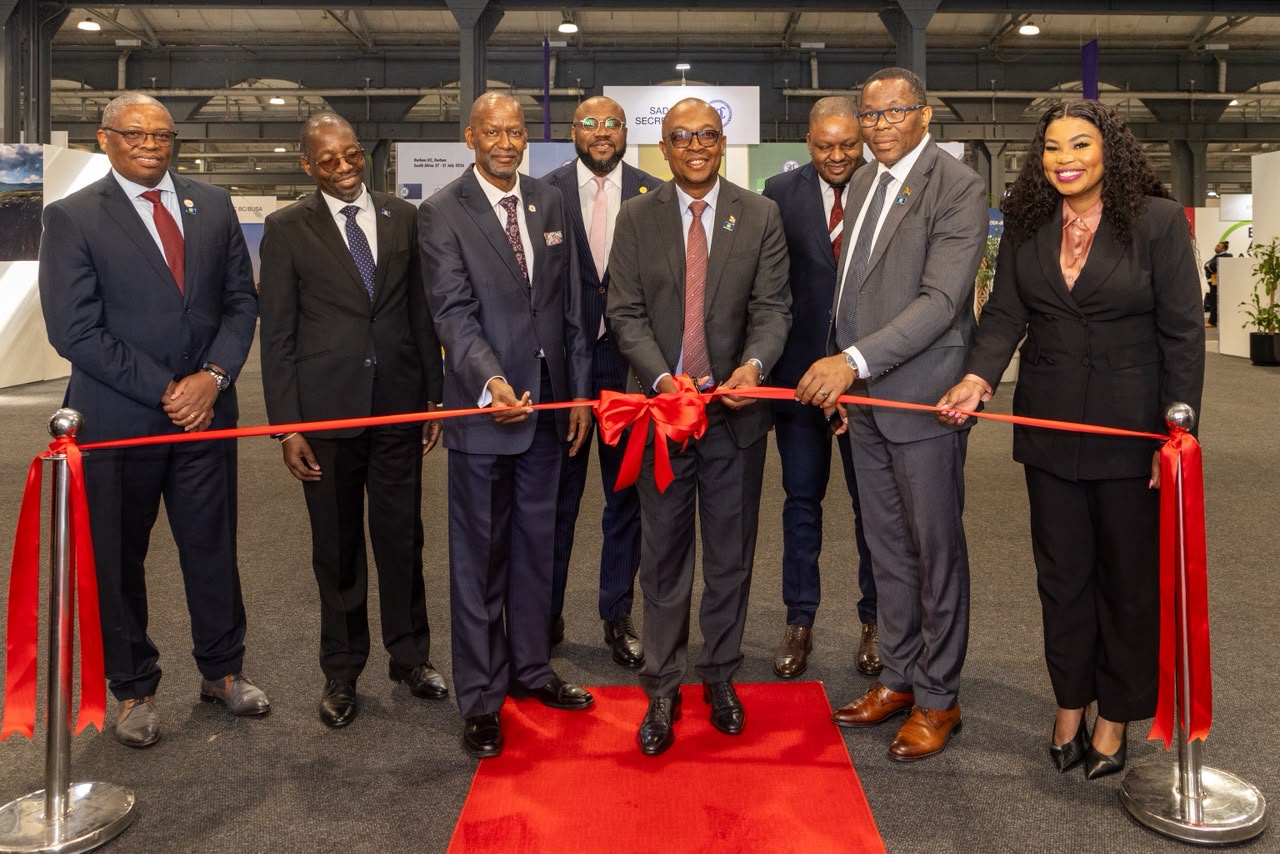
The 9th SADC Industrialization Week (SIW) and Exhibition, held from 27 to 31 July 2026 at the Durban International Convention Centre (ICC) in KwaZulu-Natal, Republic of South Africa, brought together senior government officials, policymakers, business leaders, industry experts, development partners, researchers, entrepreneurs and continental institutions to advance the region's industrialisation agenda and identify practical solutions for sustainable economic transformation.
Convened under the theme, "Resilient, Sustainable and Inclusive Industrialisation through Infrastructure Development, Agricultural and Critical Minerals Transformation in Pursuit of a Just World," the event served as a strategic platform for dialogue, collaboration and partnership-building aimed at accelerating industrial development, strengthening regional integration and promoting shared prosperity across Southern Africa.
More importantly, the Industrialisation Week served as a high-level precursor to the 46th SADC Summit of Heads of State and Government, providing an opportunity for stakeholders from across the region to deliberate on priorities and formulate recommendations that will inform regional policy and decision-making processes.
Opening the event, Honourable Parks Tau, MP, Minister of Trade, Industry and Competition of the Republic of South Africa, emphasised that industrialisation and regional integration have become increasingly urgent in a rapidly changing global environment characterised by climate change, geopolitical uncertainty, technological disruption and shifting trade dynamics.
He noted that rising protectionist trade policies and increasing global competition present significant challenges for African economies, making it imperative for the region to adapt and build more diversified, resilient and inclusive economies.
H.E. Mr. Elias Magosi, SADC Executive Secretary, underscored that Southern Africa possesses abundant natural resources, expanding markets and strategic partnerships that provide a solid foundation for industrial transformation.
He emphasised that the region's priority must now shift towards implementation through increased investment in infrastructure, agricultural transformation and the beneficiation of critical minerals. According to H.E. Magosi, these interventions are essential to creating employment opportunities, strengthening regional value chains and ensuring that the benefits of industrialisation translate into improved livelihoods for the people of Southern Africa.
H.E. Mr. Wamkele Keabetswe Mene, Secretary-General of the African Continental Free Trade Area (AfCFTA), emphasised the importance of regional industrialisation, deeper economic integration and stronger value chains in driving sustainable growth and shared prosperity across Africa. He called for strengthened manufacturing and supply chains within the SADC region and across the continent, stressing that, "when regional ambition is matched by political commitment and the desire for implementation, transformative outcomes become indeed possible."
Mr. Khulekani Mathe, Chairperson of the SADC Business Council and Chief Executive Officer of Business Unity South Africa, reaffirmed that industrialisation remains the most effective pathway to economic transformation, quality job creation and shared prosperity. He emphasised that achieving this vision requires more than policy aspirations; it demands coordinated action, strategic investment and stronger partnerships among governments, the private sector, development finance institutions and regional stakeholders.
He stressed that integrated regional value chains remain critical for increasing value addition, promoting the beneficiation of natural resources and enhancing the competitiveness of SADC industries in regional and global markets.
Ms. Angele Makombo N'Tumba, the SADC Deputy Executive Secretary for Regional Integration, led discussions that framed industrialisation within the broader context of science, technology and innovation.
She highlighted the mutually reinforcing relationship between industrialisation and innovation, noting that innovation enables industries to become more productive, efficient and competitive, while industrialisation creates demand for new technologies, production processes and business models capable of responding to changing market needs.
She reaffirmed that science, technology and innovation are recognised in both the SADC Regional Indicative Strategic Development Plan (RISDP) 2020–2030 and the SADC Industrialisation Strategy and Roadmap as fundamental enablers of industrial transformation.
A central focus of the 9th SADC Industrialisation Week was strengthening industrial competitiveness and identifying practical pathways to accelerate sustainable and inclusive economic transformation across the region.
Participants highlighted agricultural transformation and agro-processing as key drivers of industrial development and food security, while emphasising the need to promote value addition and beneficiation of critical minerals to support manufacturing and expand Southern Africa's participation in global green value chains.
The discussions also underscored the importance of strategic investments in transport infrastructure, energy systems and digital connectivity as essential enablers of trade, investment and regional competitiveness. At the same time, participants recognised the growing role of technology-driven industries including artificial intelligence, pharmaceuticals, semiconductors and smart manufacturing in enhancing productivity and driving industrial innovation.
The week further reinforced the need for stronger regional integration, policy coherence, innovative financing, cybersecurity and strategic partnerships among governments, the private sector, academia and development partners to accelerate industrialisation and build resilient, competitive and inclusive regional economies.
The exhibition component complemented the policy discussions by showcasing the region's industrial capabilities, technologies, products and investment opportunities across sectors such as manufacturing, agriculture, mining, energy, pharmaceuticals, infrastructure and digital technologies.
The Week concluded with the adoption of a declaration outlining the region's collective commitments and recommendations to accelerate industrialisation, strengthen regional value chains, enhance competitiveness and promote sustainable economic transformation.
The declaration will be submitted to the SADC Ministerial Task Force on Regional Economic Integration and subsequently to the SADC Council of Ministers for consideration.


