The Southern African Development Community (SADC) has reaffirmed its commitment to supporting continental efforts to contain the ongoing Ebola outbreak affecting the Democratic Republic of the Congo (DRC) and Uganda, while strengthening preparedness across the region.
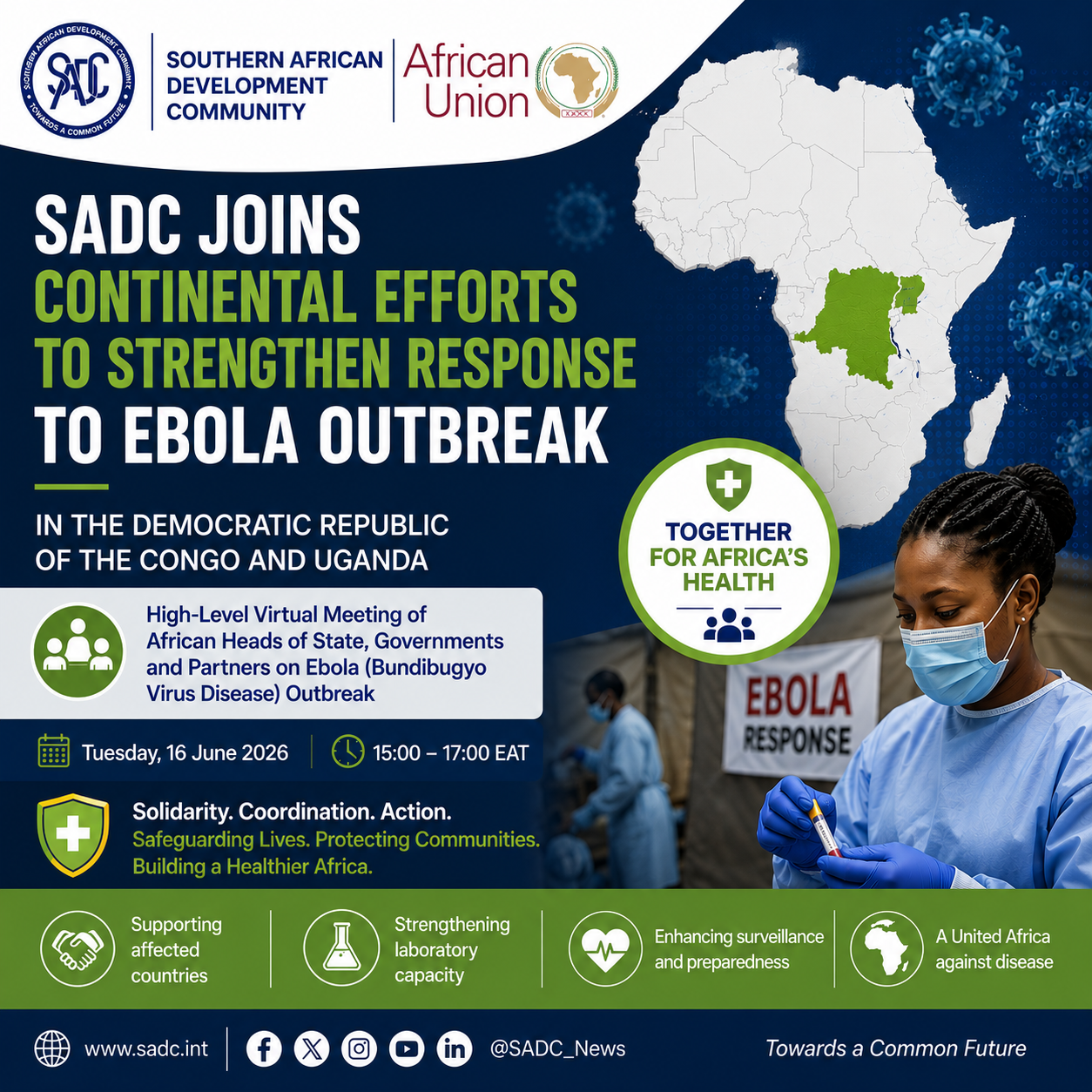
SADC Executive Secretary, Mr. Elias M. Magosi, participated in the High-Level Virtual Meeting of African Heads of State, Governments and Partners on the Ebola (Bundibugyo Virus Disease) Outbreak, convened by His Excellency Évariste Ndayishimiye, President of the Republic of Burundi and Chairperson of the African Union. The meeting brought together African leaders, regional economic communities, international partners and global health institutions to mobilise political leadership, financial support and coordinated action to address the outbreak.
The meeting featured remarks from several high-level leaders and health experts, including H.E. Mahmoud Ali Youssouf, Chairperson of the African Union Commission; H.E. Cyril Ramaphosa, President of the Republic of South Africa and African Union Champion for Pandemic Preparedness, Prevention and Response (PPPR); H.E. António Guterres, Secretary-General of the United Nations; Dr Jean Kaseya, Director General of Africa CDC; Dr Tedros Adhanom Ghebreyesus, Director-General of the World Health Organization (WHO); H.E. Yoweri Kaguta Museveni, President of the Republic of Uganda; and H.E. Félix Antoine Tshisekedi Tshilombo, President of the Democratic Republic of the Congo.
The meeting underscored the urgent need for strengthened regional and continental collaboration to contain the outbreak, support affected countries and enhance preparedness in countries at risk of cross-border transmission.
According to health authorities, the outbreak was first confirmed in May 2026 and has largely affected Ituri Province in eastern DRC, with imported cases subsequently reported in Uganda. The situation continues to pose significant public health concerns due to intense population mobility, insecurity in affected areas and the absence of an approved vaccine or treatment specifically targeting the Bundibugyo strain of the Ebola virus.
Addressing participants, leaders highlighted the importance of solidarity, coordinated action and sustained investment in public health systems to strengthen surveillance, laboratory capacity, emergency preparedness and rapid response mechanisms. The meeting also called for increased financial and technical support to implement the joint response and preparedness plan led by Africa CDC and the WHO, aimed at containing the outbreak and protecting countries at risk of regional spread.
Participants further emphasised the importance of cross-border coordination, uninterrupted movement of essential public health supplies, protection of frontline health workers, community engagement, and resource mobilisation to support the continental response effort.
SADC continues to closely monitor developments relating to the outbreak and remains engaged with Member States, Africa CDC, WHO and other partners to support regional preparedness and response efforts. The region is strengthening disease surveillance systems, promoting information sharing and enhancing cross-border collaboration to minimise the risk of further transmission.
SADC reiterates its solidarity with the Governments and people of the Democratic Republic of the Congo and Uganda and supports ongoing continental efforts aimed at safeguarding public health, protecting vulnerable communities and strengthening Africa's collective resilience against disease outbreaks.


