
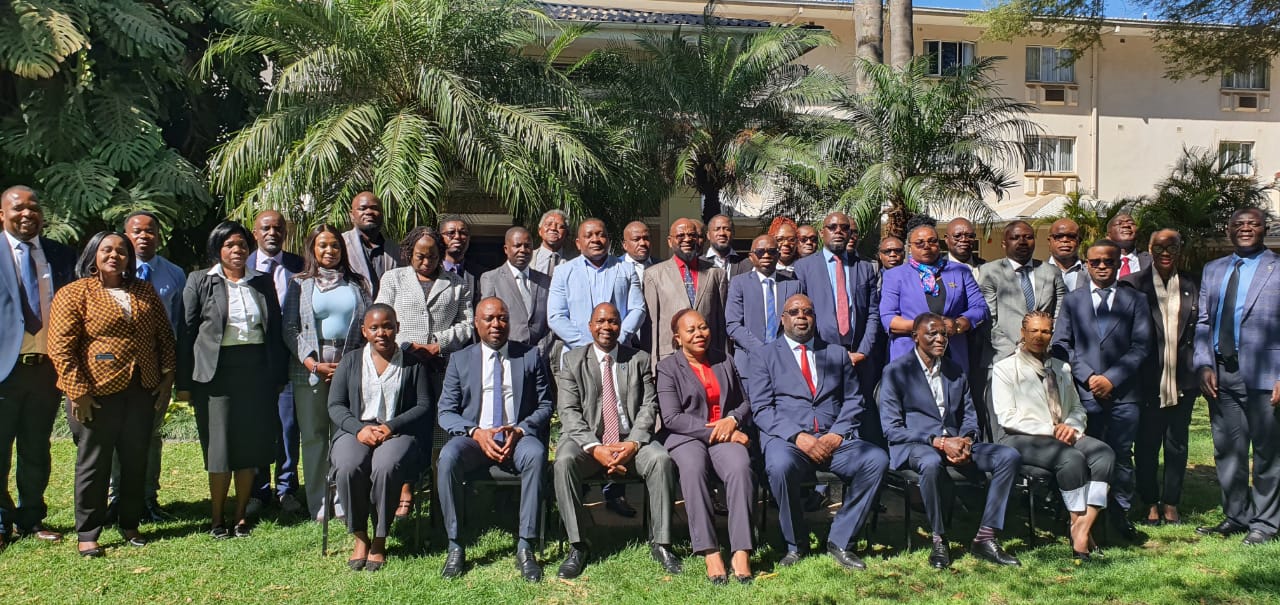
In a significant step towards deepening regional integration and enhancing trade efficiency in Southern Africa, the Southern African Development Community (SADC), with support from the African Development Bank (AfDB) under the Trade and Transit Facilitation Programme, successfully convened a High-Level Policy Dialogue Forum in Lusaka, Zambia on 4 -5 August 2026.
Held under the theme, "Getting Ready for Implementation of the SADC Simplified Trade Regime (STR)," the two-day forum brought together 50 delegates, including parliamentarians, revenue officials, trade policy and gender experts, as well as representatives of cross-border traders' associations from the pilot Member States of Malawi, Mozambique, the United Republic of Tanzania, Zambia and Zimbabwe.
The dialogue aimed to advance the operationalisation of the SADC Simplified Trade Regime Framework, building on the outcomes of capacity-building and sensitisation workshops conducted in July 2026 at the Kasumulu–Songwe, Tunduma–Nakonde and Zobwe–Mwanza border posts involving Malawi, Mozambique and the United Republic of Tanzania.
The SADC Simplified Trade Regime Framework was established to facilitate informal cross-border trade through simplified customs procedures and relaxed requirements for certificates of origin on eligible goods included in an agreed product list. The framework seeks to address complex rules of origin, eliminate non-tariff barriers and promote inclusive industrialisation across the region.
Recognising the critical role of informal trade in supporting livelihoods and strengthening food security, participants focused on addressing operational challenges at border posts, identifying capacity gaps among border agencies, traders and developing practical strategies to ensure that the trade regime delivers tangible benefits to small-scale cross-border traders.
Mrs Margaret Chikuba, Director of Trade in the Ministry of Commerce, Trade and Industry of the Republic of Zambia, underscored the importance of small-scale cross-border trade as a key driver of economic growth. She noted that complex border procedures disproportionately affect women and youth entrepreneurs, highlighting the Simplified Trade Regime as an important mechanism for reducing trade costs and expanding access to regional markets.
Honourable Clemence Chiduwa, Member of Parliament of the Republic of Zimbabwe, called on delegates to develop practical solutions to address compliance bottlenecks faced by traders at shared borders. He stressed the need for the timely implementation of the SADC STR to ensure that the benefits of the SADC Free Trade Area are extended to small-scale traders across the region.
Mr Alcides Monteiro, Senior Programme Officer for Customs and Task Manager of the Trade and Transit Facilitation Project at the SADC Secretariat, emphasised that an effective trade regime creates mutual benefits by improving customs efficiency and revenue collection for governments, while reducing transaction costs and accelerating border clearance for the private sector.
The forum also reviewed regional trade facilitation initiatives and explored synergies between the SADC STR Framework and existing simplified trade arrangements under COMESA, the East African Community and the emerging Tripartite framework. Discussions were informed by recent field assessments, which revealed limited awareness of simplified trade procedures among border officials and traders, digital exclusion, cumbersome manual processes and inadequate border infrastructure.
Participants further highlighted the importance of mainstreaming gender-responsive policies and enforcing minimum standards of treatment for traders to address corruption, harassment and unsafe conditions at border posts.
The forum generated a comprehensive set of policy recommendations for consideration by SADC policy organs. The proposals advocate for greater regional harmonisation beyond bilateral arrangements, while also exploring higher consignment value thresholds and self-certification mechanisms to align the SADC STR with continental trade developments under the African Continental Free Trade Area (AfCFTA).
The forum concluded with a renewed commitment by Member States to translate regional frameworks into concrete action by accelerating bilateral negotiations, implementing pilot border initiatives and strengthening collaboration between public and private sector stakeholders to promote seamless and inclusive trade across the SADC region, benefiting both large enterprises and small-scale cross-border traders.


