
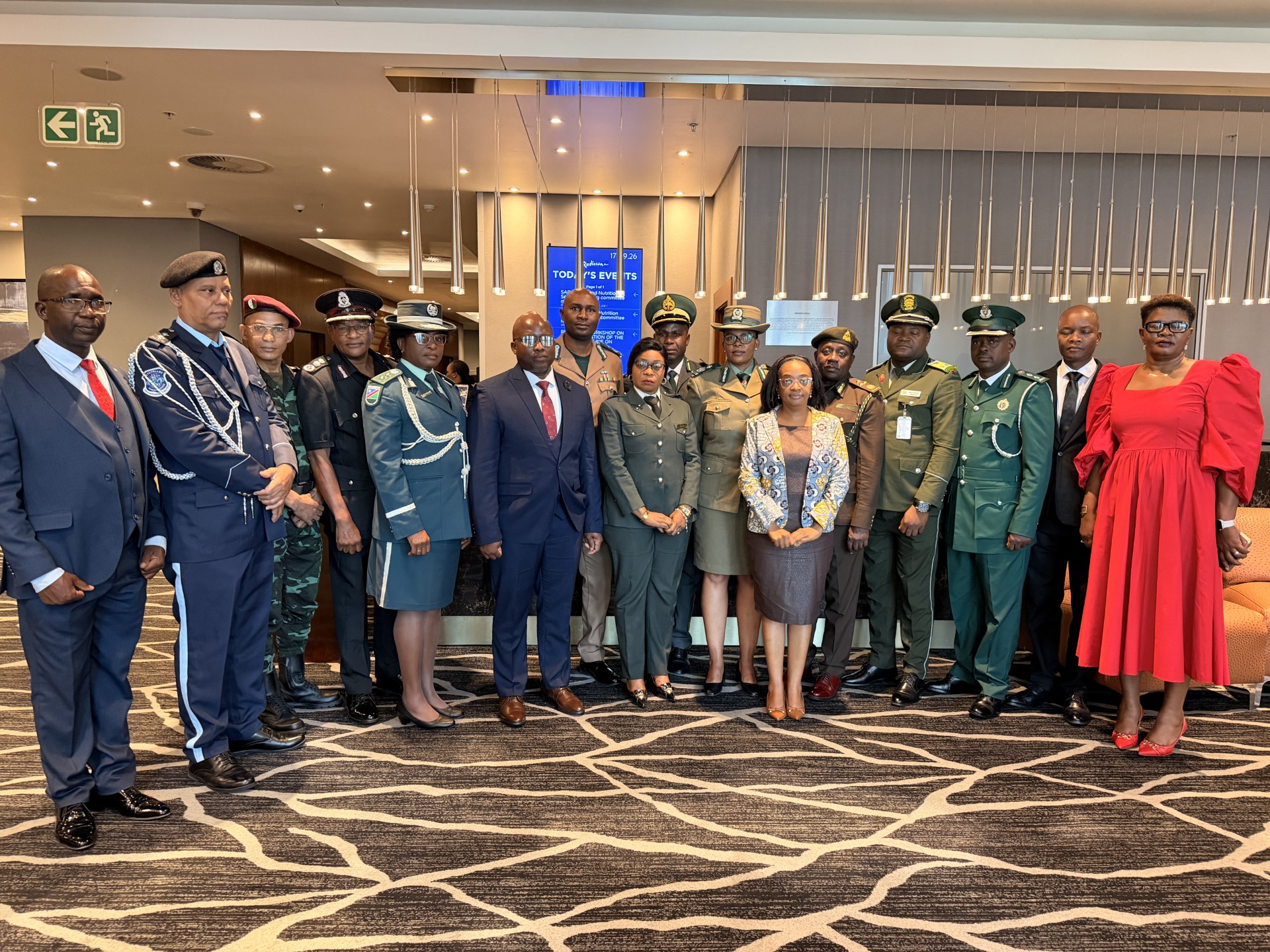
The Southern African Development Community (SADC) convened a three-day regional workshop in Johannesburg, Republic of South Africa, aimed at enhancing regional peace and security through the development of a Regional Guideline on Intelligence Management in Correctional Services. The guideline is intended to strengthen the contribution of correctional and prison services to national and regional early warning systems.
The workshop, held from 17 to 19 September 2026, brought together technical experts from SADC Member States to share national experiences, review existing institutional frameworks, and develop practical approaches to intelligence management within correctional services.
Recognising the strategic role of correctional and prison services within the region's peace and security architecture, participants underscored the importance of these institutions not only in offender management, rehabilitation, and public safety, but also in supporting the identification and prevention of emerging security threats. As integral components of national security systems, correctional institutions can provide valuable information that contributes to early warning and informed decision-making.
The workshop was officially opened by Senior Superintendent Melusi Hlanze of the Kingdom of Eswatini, representing the current Chair of the SADC Organ on Politics, Defence and Security Cooperation. In his opening remarks, he reaffirmed SADC's commitment to prevention and early action as critical elements in maintaining regional peace, security, and stability.
He stressed that effective early warning systems depend on the timely identification of emerging risks and the responsible management of information, underscoring the need for stronger cooperation among institutions involved in national and regional security efforts.
Speaking at the opening of the workshop, Ms Ntambose Banda, Acting Senior Officer at the Regional Early Warning Centre of the SADC Secretariat, highlighted the importance of effective information and intelligence management in strengthening the capacity of correctional and prison services to identify potential risks and support timely interventions.
“Effective intelligence management can play an important role in supporting early warning and informed decision-making,” she said, emphasising that such efforts must be undertaken within the legal and institutional frameworks of Member States and in accordance with the mandates of national institutions.
Ms Banda further noted that the initiative is aligned with the SADC Treaty, SADC Vision 2050, and the Regional Indicative Strategic Development Plan (RISDP) 2020-2030, all of which identify peace, security, and good governance as essential pillars for regional integration and sustainable development.
During the three-day engagement, delegates provided technical inputs and deliberated on measures to strengthen coordination between correctional and prison services and relevant national and regional structures. The discussions are expected to contribute to the development of a harmonised regional framework that enhances information sharing, supports proactive responses to security challenges, and strengthens the overall effectiveness of SADC's peace and security architecture.
The initiative is supported through funding from the European Union under the Enhancing the Capability and Effectiveness of SADC's Peace and Security Architecture (ECESPA) Programme, which seeks to strengthen the institutional and operational capacity of regional peace and security mechanisms across the SADC region.


